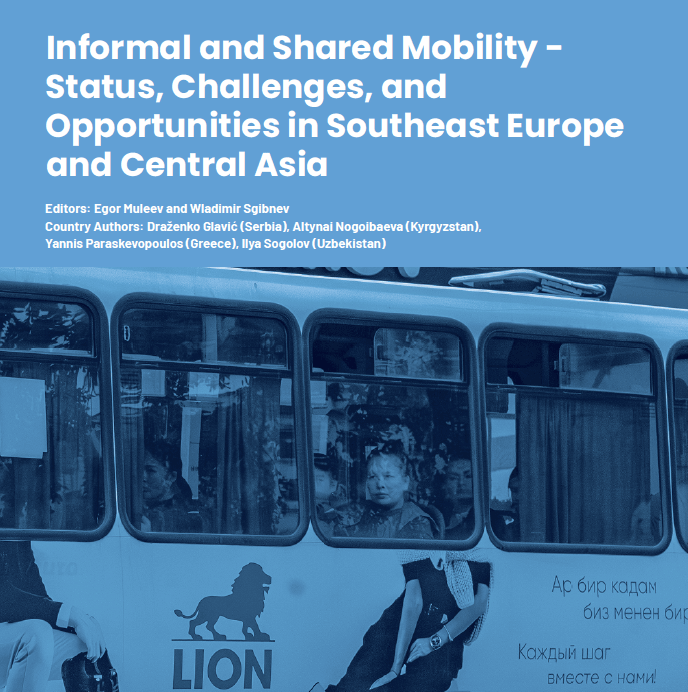
Informal and Shared Mobility – Status, Challenges, and Opportunities in Southeast Europe and Central Asia
Informal and shared mobility systems are vital components of urban transport networks across both the Global South and Central and Eastern Europe. Every day, minibuses, shared rides, and informal taxis provide millions of residents with essential access to employment and public services while sustaining the livelihoods of local operators.
Yet despite their ubiquity and social significance, evidence regarding their regulatory frameworks, current status, and future trajectories remains fragmented. This knowledge gap hinders effective policy design and perpetuates a disconnect between academic research and the lived realities of passengers and transport workers.
A new study addresses this gap, providing the first comprehensive regional assessment of informal and shared mobility across Southeast Europe and Central Asia.
Unique Transport Cultures and Post-Socialist Legacies
The report highlights a distinct region—with a specific focus on Greece, Serbia, Kyrgyzstan, and Uzbekistan – shaped by a unique combination of post-socialist legacies, evolving regulatory environments, and diverse transport cultures.
Key areas examined in the study include:
- Marshrutka minibus systems: Deeply embedded transport networks that form the backbone of Central Asian urban mobility.
- Informal taxis and shared rides: Widespread, flexible mobility solutions operating across the Balkans.
- Shared challenges and local solutions: How the region’s mobility ecosystems navigate demands for safety, affordability, and environmental sustainability.
From Fieldwork to Actionable Policy Insights
The publication draws on a rigorous methodology combining extensive literature reviews, analysis of current research, expert interviews, and broad stakeholder consultations across the region.
It provides an in-depth analysis of present context, emerging trends, and key challenges, identifying critical research priorities and offering actionable guidance for policymakers and urban planners striving to build equitable, affordable, and sustainable transport systems.
A Key Component of a Global Mapping Initiative
This report marks the latest installment in an ongoing regional research series, building on previous studies covering China (2022), India (2023), and Southeast Asia – Cambodia, Vietnam, Indonesia, and Thailand (2025). Together with insights from global living labs, this study contributes vital data to the growing international evidence base on urban transport governance.
This publication was made possible through extensive collaboration with local researchers, transport practitioners, policymakers, and civil society organizations across the region.
Download
Authors
Editors: Egor Muleev and Wladimir Sgibnev Country Authors: Draženko Glavić (Serbia), Altynai Nogoibaeva (Kyrgyzstan), Yannis Paraskevopoulos (Greece), Ilya Sogolov (Uzbekistan)
Publication date
2026/08/31
Language
English
Production
VREF
ISBN
978-91-991090-0-8
More Publications
Informal and Shared Mobility – Status, Challenges, and Opportunities in Southeast Europe and Central Asia
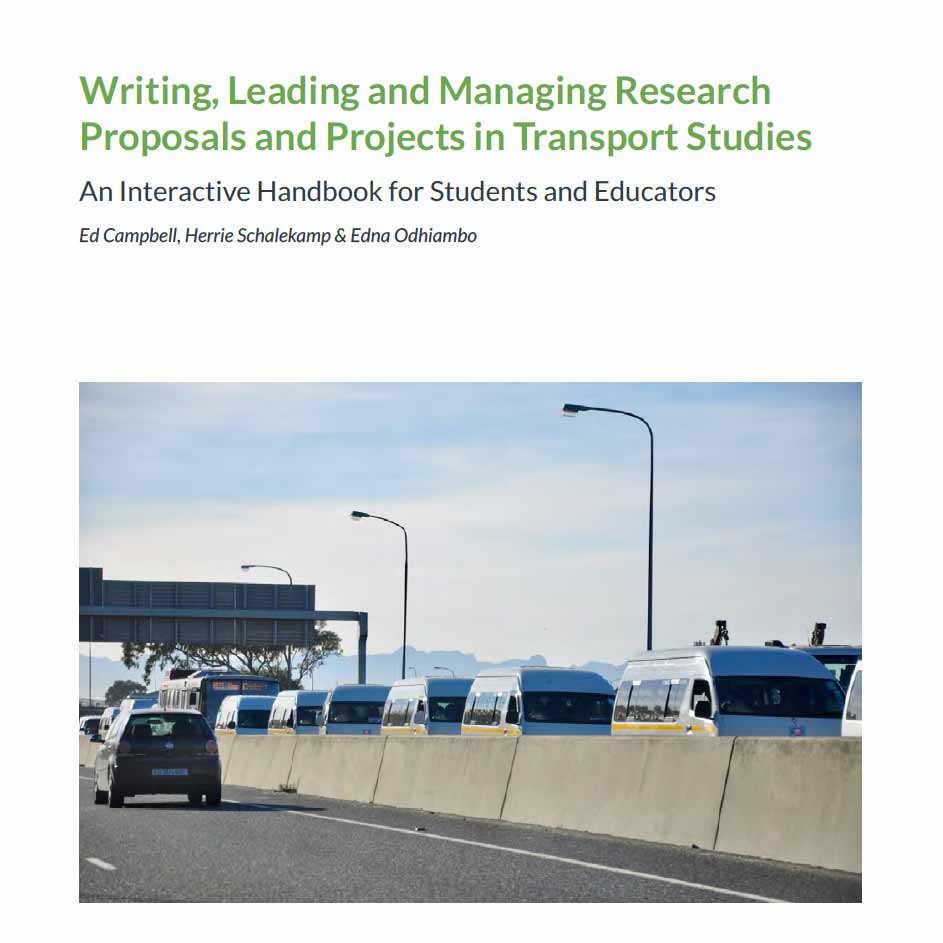
Writing, Leading and Managing Research Proposals and Projects in Transport Studies – An Interactive Handbook for Students and Educators