VREF Renews Funding for PRISM
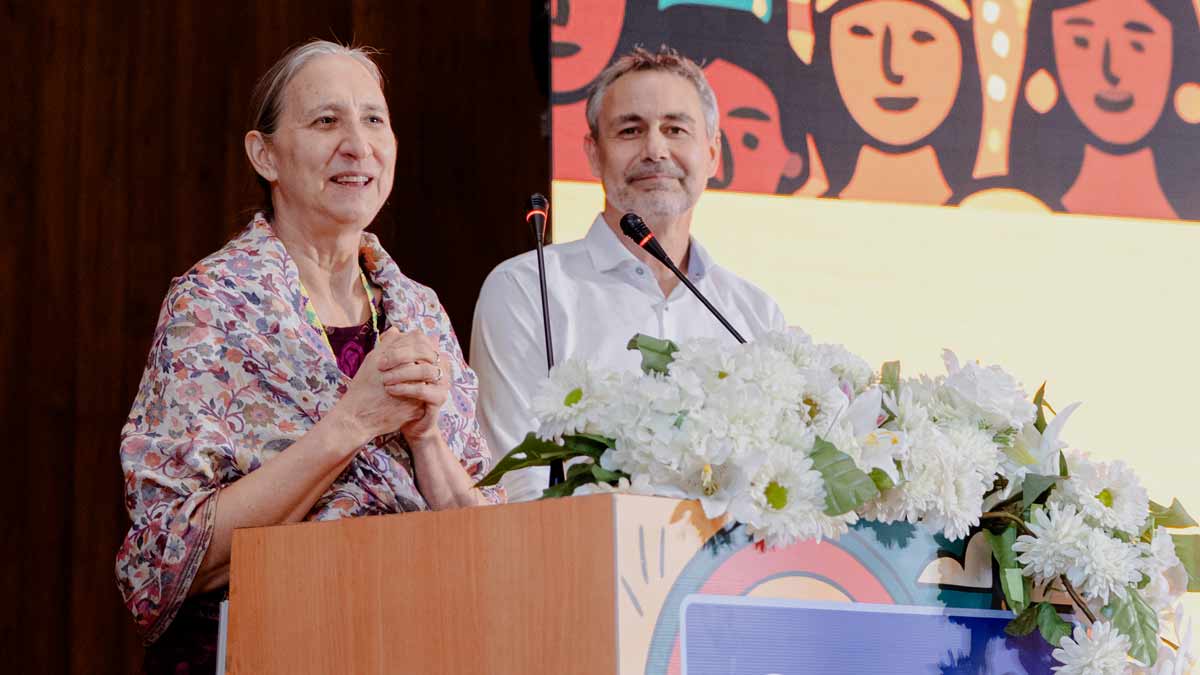
PRISM's Consortium Leader, Dr. Jacqueline M. Klopp, and VREF's ISM Strategic Advisor Holger Dalkmann sharing the stage at GLOCON 2026.
VREF Renews Funding for PRISM Consortium: Grounded Research on Informal and Shared Mobility Enters Phase 2
The Board of the Volvo Research and Educational Foundations (VREF) has granted 15 MSEK in renewed funding for the research consortium PRISM (Partnership for Research on Informal and Shared Mobility) for the 2027–2029 period. The decision marks a major step forward for the program and was formally announced during the 1st Global Convening on Informal and Shared Mobility (GLOCON 2026) in Bangkok.
A defining milestone for VREF’s Informal and Shared Mobility (ISM) program came in 2023 with the launch of an open, competitive call to establish a dedicated, long-term International Research Program (IRP) for the sector – awarded to the global consortium PRISM. Coordinated by the Center for Sustainable Urban Development (CSUD) at the Columbia Climate School, this pioneering alliance unites leading research centers in the United States, South Africa, Colombia, and Thailand, distinguished scholars in Ghana and the United Kingdom, and key non-governmental partners in Costa Rica, India, China, and the US.
Under the banner ”An Equity, Ecosystems and Engaged Approach to Informal Transport and Shared Mobility”, the consortium has championed a collaborative, grassroots model of knowledge creation. Through seven innovative Living Labs established across eight diverse cities – Accra, Bangkok, Beijing, Bogotá, Cape Town, Kumasi, Mumbai, and Metro San José – PRISM demonstrated during its initial three years the vital importance of connecting rigorous academic scholarship directly with community realities, frontline transport workers, and municipal actors.
Priorities for Phase 2 (2027–2029)
In its second phase, PRISM transitions from baseline diagnosis toward applied interventions, institutional sustainability, and actionable policy impact:
Actionable pilots: Testing concrete interventions co-designed with workers and local authorities, including climate-resilient shade and cooling stations for transport workers, micro-mobility delivery hub infrastructure, and proactive, demand-responsive route-licensing models.
Four regional hubs: Decentralizing governance into regional knowledge hubs in Bangkok (Southeast Asia), Bogotá (Latin America and the Caribbean), Cape Town and Accra (Africa), and Mumbai (South Asia) to anchor localized policy dialogue and cross-city learning.
New York Living Lab: Establishing a new Living Lab in New York City focusing on commuter vans and electrification, challenging conventional North–South divisions and exploring informal transit realities across differing economic settings.
New research frontiers: Expanding inquiry into rapidly growing and under-researched areas, including app-based motorcycle deliveries, driver occupational health, climate adaptation, and the critical interface between informal transport and walking, developed in partnership with the VREF Walking Cities Lab.
NextGen scholars and open education: Providing direct scholarships and mentoring to approximately 21 embedded Master’s, PhD, and postdoctoral researchers, institutionalizing the Graduate Research Academy (GRA) ahead of GLOCON 2028 in Bogotá, and developing an open-access Massive Open Online Course (MOOC) with modules in local languages.
Leadership Perspectives
– When VREF launched the competitive call for an International Research Program within ISM, our ambition was to build a rigorous, long-term evidence base rooted in the everyday realities of transport workers and passengers. Over its first phase, PRISM has demonstrated the profound value of genuine co-production and grounded scholarship. By renewing our support for 2027–2029, VREF is proud to help deepen this evidence base, support the testing of practical solutions on the ground, and invest in the emerging researchers who will carry this vital work forward, says Henrik Nolmark, Director, VREF.
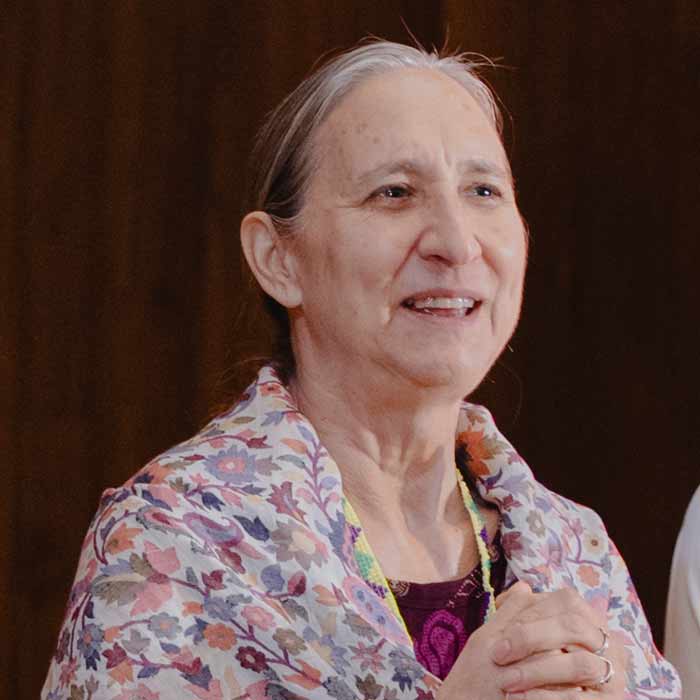
– Phase 1 allowed us to establish our Living Labs, build trust across communities, and document the indispensable role that informal and shared mobility plays in sustaining cities across the globe. We are deeply grateful for VREF’s continued confidence and partnership. Over the next three years, our priority is to translate this knowledge into tangible action – testing interventions on the ground alongside workers and policymakers, and equipping a new generation of scholars to help shape a more just and sustainable mobility transition, says Dr. Jacqueline M. Klopp, Consortium Leader, CSUD, Columbia Climate School.
– GLOCON 2026 in Bangkok showed how much the informal and shared mobility ecosystem has grown, bringing together researchers, practitioners, policymakers, workers and operators from 42 countries. PRISM partners, including WRI and GNPT, have been a driving force in this growth, bringing research-based knowledge into policymaking. Phase 2 builds on that momentum on the road to GLOCON 2028 in Bogotá, says Holger Dalkmann, Senior Advisor, VREF.