VREF Commits 24 MSEK to New International Research Program on Walking

”The Walking Cities Lab: making walking for transport a global priority” selected as VREF’s new flagship program.
The Volvo Research and Educational Foundations (VREF) is proud to announce the establishment of a major new research initiative within its Walking as a Mode of Transport program: The Walking Cities Lab: making walking for transport a global priority.
Following a decision by the VREF Board, the foundation has approved the launch of this new International Research Program (IRP) with a budget framework of SEK 24,000,000 over the next four years (2026–2029). The program will be hosted by University College London (UCL) and led by Dr. Daniel Oviedo at the Bartlett Development Planning Unit, coordinating a global consortium of researchers and practitioners.
Background: Elevating Walking on the Global Agenda
This investment is the result of a targeted call by VREF to strengthen international research and education on walking. Despite being ubiquitous, walking remains largely "invisible" in transport policy and data. Cities worldwide are grappling with the legacy of car-centric planning, which often overlooks the needs of pedestrians—especially in the Global South where walking is a necessity yet often fraught with safety risks and exclusion.
With the VREF IRP-WALKING, the foundation aims to bridge the gap between policy ambition and on-the-ground reality. The goal is to establish "Walking-for-Transport" as a complex urban system that is integral to resilience, equity, and low-carbon transitions.
A Hub for Global Collaboration IRP-WALKING will operate as a global incubator for knowledge and action. The work will be anchored by three regional Urban Living Labs in Ghana, Brazil, and India.
These hubs will drive deep, context-specific research into critical themes, including:
- Climate Resilience: Positioning walking as an essential ingredient for adaptation to extreme weather.
- Caring Cities: Understanding how walking supports the daily mobility needs of caregivers and vulnerable groups.
- Governance: Developing strategies to mainstream walking into urban policy and budgeting.
Supported by a network of strategic partners such as Walk21, WRI, and ICLEI, the consortium aims to generate actionable knowledge that ensures walking becomes a safe, viable, and valued mode of transport for everyone.
Henrik Nolmark, Director of VREF: ”Walking is vital for equitable access and sustainable urban mobility, yet it remains under-prioritized. Through our Walking as a Mode of Transport program, we sought a research initiative capable of breaking new ground. The IRP-WALKING consortium combines scientific excellence with a strong commitment to transdisciplinary work. Our vision is for this program to become the global go-to place for knowledge on walking, driving the agenda for walking as a recognized mode of transport.”
Torbjörn Holmström, Chair of the VREF Board: ”The decision to fund this program reflects our commitment to supporting research that addresses complex global challenges. The proposal was selected after a comprehensive review involving our Scientific Council and international experts. We are confident that this four-year commitment will allow the consortium to build a robust international community of learning that connects research with real-world policy impact.”
Dr. Daniel Oviedo, Associate Professor at UCL and Principal Investigator: ”We are thrilled and honored to lead this new program funded by VREF. This IRP represents a unique opportunity to rethink the role of walking in our cities. By bringing together researchers and practitioners across Africa, Europe, Asia, and Latin America, we aim to generate actionable knowledge that ensures walking becomes a safe, viable, and valued mode of transport for everyone. This funding allows us to take a truly global perspective on one of the most essential aspects of urban life.”

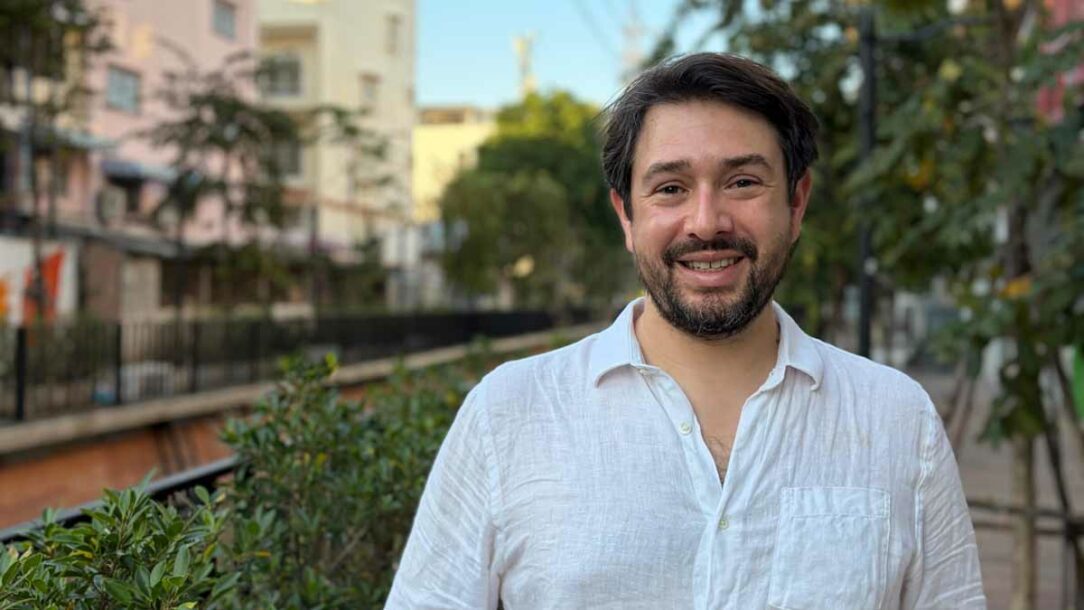
Dr. Daniel Oviedo.