
Lee Schipper Memorial Scholarship
for Sustainable Transport and Energy Efficiency
Lee Schipper Memorial Scholarship
The “Lee Schipper Memorial Scholarship for Sustainable Transport and Energy Efficiency” targets supporting the momentum of Lee Schipper’s contribution to the enrichment of the international policy dialogue in the fields of sustainable transport and energy efficiency. Lee Schipper, international physicist, researcher, musician and co-founder of EMBARQ (today the Urban Mobility program of the World Resources Institute (WRI) Ross Center for Sustainable Cities) inspired and shaped the thinking of a generation of students and professionals. VREF has supported the Lee Schipper Memorial Scholarship since 2018, and beginning in 2026, the Kuehne Climate Center will sponsor two new freight scholarships.
Meet the 2026 Lee Schipper Memorial Scholarship Awardees!

Five young researchers have been awarded the prestigious 2026 Lee Schipper Memorial Scholarship to advance transformative research in sustainable transport and energy efficiency. Supported by VREF and the Kuehne Climate Center, this year's funded projects tackle critical global challenges—from decarbonizing ports and electrifying last-mile logistics to heat-responsive mobility and informal supply chain efficiency.
Congratulations to the 2026 scholars: Ayodeji Stephen Adekanbi, Alicia Fortuin-Brown, Cheng-Kai Hsu, Adejumo John Olukorede, and Yufei Wang.
2025
Mienke Knipe for her research proposal “Practical Viability of Electric Paratransit: An Analysis of Finances and Industry Willingness, Post-Technical Viability Testing, in South Africa.” She holds a Master of Commerce degree in transport economics from Stellenbosch University, where she graduated cum laude, and is currently a Ph.D. candidate in transport economics. Knipe recently completed the World Bank’s African Fellowship as a transport economist. From her research, she will develop an electrification financial viability model for electric minibus taxis in South Africa, informed by vehicle tracking data in Cape Town. In-depth interviews with minibus taxi owners will reveal their willingness to transition to electric vehicles as well as practical requirements for transition. She will also develop a holistic framework for evaluating electric vehicle integration with paratransit networks in South Africa.
Ignacio Tiznado-Aitken for his research proposal “Measuring Transport Poverty: A Comparative Lens Between Chile and Canada.” Tiznado-Aitken holds a Ph.D. in engineering sciences from Pontificia Universidad Católica de Chile and is an assistant professor in the Department of Geography and Planning at the University of Toronto. He also serves as the associate director of the Mobilizing Justice Partnership. Tiznado-Aitken’s research will measure and analyze transport poverty — a person’s inability to participate fully in society due to limited mobility, accessibility, affordability or exposure to externalities — in two Chilean cities, Santiago and Concepción, building upon Canada’s Mobilizing Justice Partnership. The project will generate original data through a primary survey, allowing for the characterization of transport poverty across population groups, as well as spatial analysis. The research will develop a baseline of transport poverty in Chile, while also allowing comparisons between Chile and Canada.
Shreya Banerjee for her research proposal “Women-on-the-Go: A Novel Walkability Decision Framework for Extreme Weather Resilience.” Banerjee holds a Ph.D. in architecture and regional planning and a master’s degree in city planning from the Indian Institute of Technology Kharagpur. She is currently an assistant professor in the Center for Emerging Technologies for Sustainable Development at the Indian Institute of Technology Jodhpur. Her research develops a first-of-its-kind, gender-responsive walkability framework considering extreme weather resilience in two cities in South Asia: Jodhpur (extreme heat) and Kathmandu (extreme cold). Through a survey of women pedestrians and by collecting their health data, the project aims to understand the hyperlocal range for comfortable walking for women, as well as the barriers hindering women’s walkability. Banerjee’s research will investigate how access to shared mobility affects walkability for women and simulate how potential street design recommendations could improve resilience to extreme weather conditions.
2024
Africa scholar: Olanike Babalola Ph.D candidate, University of Lagos
Tom Courtright Ph.D candidate, University of Cape Town
Nicholas Goedeking Ph.D, German Institute of Development and Sustainability
2023
Africa scholar: Owen Mwaura, PhD candidate, University of Cape Town
Carlos Rivera-Gonzalez, Postdoctoral fellow, University of Toronto
Shanshan (“Shirley”) Liu, PhD candidate, University of Illinois at Urbana-Champaign
2022
Africa scholar: Robert Ambunda, PhD candidate, Stellenbosch University
Lucía Game, PhD candidate, University of California, Berkeley
2021
African scholar: Susan Gichuna, PhD candidate, University of Nairobi
Tamara Kutchner, PhD candidate, University of California, Berkeley
Wei Wei, PhD candidate, Massachusetts Institute of Technology
2020
African scholar: Abisai Konstantinus, Postdoctoral researcher, University of Cape Town
Jungwoo Chun, PhD candidate, Massachusetts Institute of Technology
Fariba Siddiq, PhD candidate, University of California, Los Angeles
2019
Teddy Forscher, PhD candidate, University of California, Berkeley
Valentina Montoya Robledo, SJD candidate, Harvard University
2018
Junia Compostella, PhD candidate, University of California, Davis
Jaime Soza Parra, PhD candidate, Pontificia Universidad Católica de Chile
2017
Joanna Moody, PhD candidate, Massachusetts Institute of Technology
Rafael Pereira, PhD candidate, University of Oxford
2016
Akshima Chate, Senior Fellow, The Energy and Resources Institute (TERI)
Fiamma Perez-Prada, PhD candidate, Universidad Politécnica de Madrid
2015
Gwyn Kash, PhD candidate, University of North Carolina at Chapel Hill
2014
Madeline Brozen, Complete Streets Initiative Program Manager, University of California, Los Angeles
Erik Vergel-Tovar, PhD candidate, University of North Carolina at Chapel Hill
2013
Sudhir Gota, Technical Advisor, Clean Air Initiative Asia
Fei Li, Ph.D. candidate, New York University
About
If you are interested in knowing more about the Scholarship, or if you have ideas that you would like to share with us, please send us an email to leeschipperscholarship@gmail.com
The Scholarship aims to expand contributions to sustainable transport and energy efficiency research and policy dialogue. It prioritizes “iconoclastic” contributions that have clear, transformative outputs and contribute to measurable changes. Proposals relating to different aspects of policy dialogue are welcome, including data collection and quality, diagnosis through data analysis (qualitative and quantitative), policy analysis and evaluation, and interdisciplinary and international comparative analysis.
Applications will be evaluated based on the following criteria:
- Consistency with Lee Schipper’s contributions
- Alignment with the idea of sustainable transport and energy efficiency
- Creation of innovative, transformational outcomes (“real impact”)
- Feasibility (timely, realistic)
- Applicant (affiliation, background, previous contributions, references)
In addition to the global selection criteria above, applicants to the Freight Scholarships should propose research projects related to sustainable freight or logistics.
The African Scholarship supports a young researcher from the African continent currently living and working in Africa. In addition to the global selection criteria above, applicants to the African Scholarships should also:
- Hold citizenship of an African country
- Currently live and work in Africa
- Be associated with an African-based institution (or an African branch of an international institution)
- Propose research taking place in Africa
Guiding Webinar with Q&A – How to Apply
To keep Lee’s legacy alive, the Schipper Family and EMBARQ, the sustainable urban mobility initiative of the World Resources Institute’s Ross Center for Sustainable Cities, created the Lee Schipper Memorial Scholarship for Sustainable Transport and Energy Efficiency. The Scholarship is provided jointly by the Schipper Family, Volvo Research and Education Foundations (VREF), the World Resources Institute’s (WRI) Ross Center for Sustainable Cities, and the Kuehne Climate Center. The Scholarship is governed by an advisory board of selected experts and esteemed colleagues who guide the scholarship and make the final selection of the scholars.
Advisory Board:
- Holger Dalkmann, Founder & CEO, Sustain 2030
- Ramon Munoz-Raskin, Program Leader, on behalf of the Schipper Family
- Dario Hidalgo, Professor of Transport and Logistics, Pontificia Universidad Javeriana
- Joanna Moody, Sustainable transport professional and Lee Schipper Memorial Scholarship Awardee (2017)
- Wei-Shiuen Ng, Economic Affairs Officer, United Nations ESCAP
- Sam Zimmerman, Urban Transport Advisor (retired), World Bank
In Memoriam: Nancy Kete, co-founder and former Director of WRI’s sustainable urban mobility center (EMBARQ).
Lee Schipper inspired and shaped the thinking of a generation
The following was adapted from an obituary written by Kirk R. Smith in Energy Policy
Lee Schipper was an international physicist, researcher and musician, who inspired and shaped the thinking of a generation of students and professionals. Lee was widely recognized for enriching policy dialogue with his passion for data and challenging conventional wisdom. Lee passed away in August 2011 after a brief and difficult battle with pancreatic cancer.
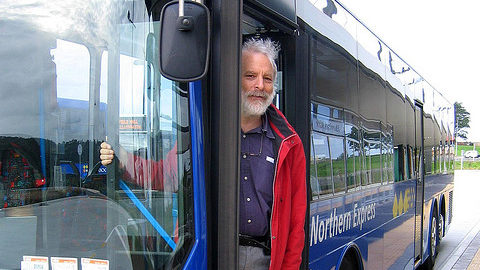
Highly productive career
Most recently, Lee was a senior research scientist at both University of California Berkeley’s Global Metropolitan Studies and at Stanford University’s Precourt Institute of Energy Efficiency conducting research and policy analysis on efficient energy use in transportation systems. He was co-founder of EMBARQ, the World Resources Institute’s Center for Sustainable Transport, and remained as a senior associate emeritus. Over a highly productive career, he worked at the Energy and Resources Group at UC Berkeley, Lawrence Berkeley National Lab, the International Energy Agency in Paris, Shell International in London, as well as being Fulbright Scholar at the Beijer Institute of Ecological Economics in Stockholm. He was a guest researcher at the World Bank, VVS Tekniska Foerening, the OECD Development Center, and the Stockholm Environment Institute.
Sharing the Nobel Peace Prize
Lee authored more than 100 technical papers and a number of books on energy economics and transportation, including Energy Efficiency and Human Activity: Past Trends, Future Prospects (1992) with Stephen Meyers, Richard Howarth, and Ruth Steiner. He served on the editorial boards of five major journals and was a member of the Swedish Board for Transportation and Communications Research. For four years he was a member of the U.S. National Academy of Science’s Transportation Research Board’s Committee on Sustainable Transport and Committee on Developing Countries. He worked in IPCC’s Mitigation group (WGIII), for the third and fourth assessments, thus sharing the Nobel Peace Prize in 2007.
Proponent of sensible policies
In Berkeley in the early 1970s, Professor John Holdren, President Obama’s Science Advisor, was the first person to hire Lee as an energy specialist. He notes that ‘‘Lee was one of the first people to point out that people don’t want to consume energy, but they want to consume energy services, like transportation, comfortable rooms, cold beer and so forth. And that there was an enormous variation in the amount of energy needed to perform those services.’’ Lee’s academic break came in 1976, between the first and second international oil shocks, when he published an influential paper in Science pointing out that Sweden consumed far less energy per unit of economic activity than the United States did. Lee shifted his primary attention to transport in the 1980s, becoming one of the premiere scholars in the field and a tireless proponent of sensible policies for public and private transport.
Master communicator
Lee was a force of nature—an irrepressible fountain of energy, insight, humor, and intelligence. And a master communicator. Part of this was being an irrepressible iconoclast with a wonderful knack of turning a phrase to excellent effect. He could make the basically dry subject of energy efficiency become exciting in ways that engaged students, the media, and policymakers. Evidence for this was publishing 15 letters to the editor in the New York Times on energy efficiency—a nearly legendary achievement. He was also kind, generous, and unselfish with his friends and students and with the grace and self-confidence to be curious and inquisitive about what others were doing.
Vibraphonist
Lee was multi-talented beyond his science. As a UC Berkeley student and vibraphonist, he led his jazz group to victory at the Notre Dame Jazz Festival in 1967. He would reprise the role as band leader with an ad hoc jazz group, Lee Schipper and the Mitigators, who performed primarily in conjunction with energy-related conferences. He was one of the world’s experts on Wilhelm Furtwangler, perhaps the greatest symphonic and operatic conductor of the 20th century, and collected one of the most complete sets of his recordings. Lee seemed to pick up languages effortlessly, speaking fluent Swedish, German, and French, and passable Norwegian, Danish, Spanish, and Portuguese. Even a bit of Russian.